


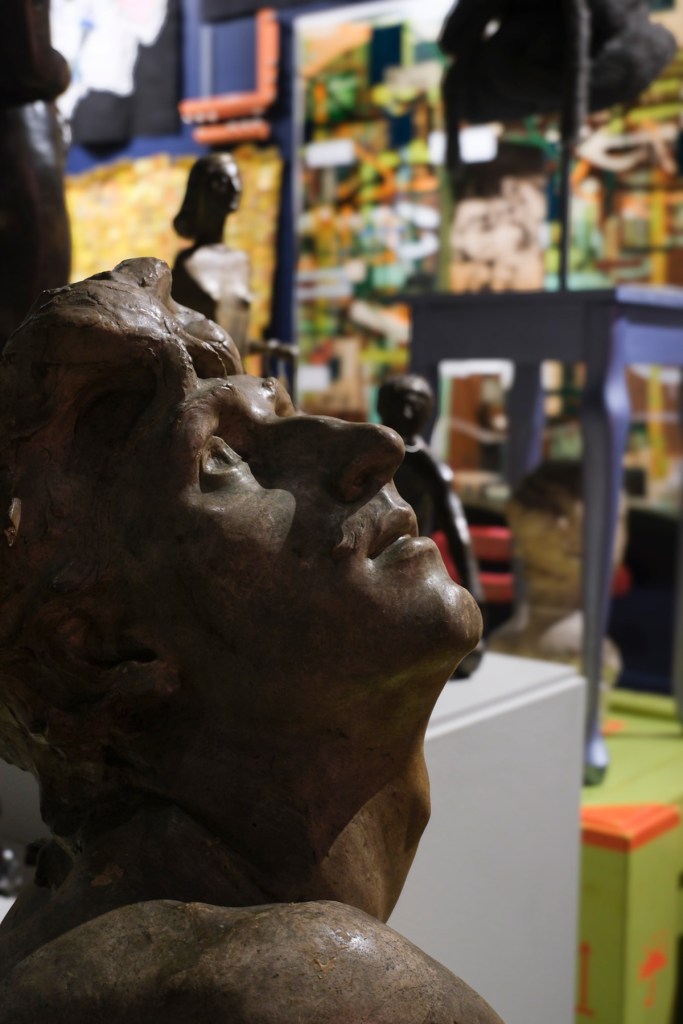
Signalfiler (2025), made of handmade paper, used clothing, fabric, wood and acrylic, by Eric Conrad, one of three artists to be featured in the “2026 Charlotte Street Visual Artist Awards Exhibition” at Emily & Todd Voth Artspace. (Charlotte Street)
Exhibition highlights in Kansas City and the region
KANSAS CITY

Diallo Javonne French: 2 Decades in Focus, through Oct. 2, Kansas City Kansas Community College Gallery, www.kckcc.edu
The work of seasoned photographer and filmmaker Diallo Javonne French is the subject of the 20-year retrospective “2 Decades in Focus” at the KCK Community College Gallery. French’s celebrated work is heavily weighted with intimate images of musicians in Kansas City’s iconic jazz scene, where he angles close to the stage to capture the perfect moment of light, sound and energy.
“I like to get musicians in their element. The pictures are not posed. I call them honest musical moments,” he told KC Studio in 2021. French was featured in the “Testimony” exhibit at The Nelson-Atkins Museum of Art in 2021-22.
“There is something very magical about the marriage of music and image,” he says. The magical nature of his work makes this exhibition worth seeing. — Harold Smith

Journey to the West: A Survey of Hong Chun Zhang’s Art, 1996–2026, through Oct. 10, Mulvane Art Museum, Topeka, www.mulvaneartmuseum.org
Born in China, raised in an artist family, and educated at the renowned Central Academy of Fine Arts in Beijing, Hong Chun Zhang came to the United States for graduate studies in 1996. “Journey to the West” marks the thirtieth anniversary of that immigration. Soon after her arrival, Zhang adopted the visual motif of long straight black hair — a striking emblem of her origin and womanhood. Over the years, the theme has lent itself to richly inventive variation and served as an eloquent vocabulary for Zhang’s meditations on family, belonging and culture. In these works, hair is both physical and symbolic, figurative and abstract. The hair is gleamingly described in charcoal on long Chinese paper scrolls or in Chinese ink on bolts of fabric. It is disembodied, monumentally scaled, impossibly protracted. The highly polished images are often strikingly surreal: Hair flows like water, crests like waves, tumbles from the ceiling and across the floor. Recently Zhang, a longtime resident of Lawrence, has subtly integrated the hair motif into expansive Kansas landscapes of tallgrass prairies and swirling tornadoes. The tension is in the medium: In these works, Zhang employs the Chinese ink painting technique she learned from her artist parents and in Beijing. The softly colored paintings are fascinating reflections on the persistence of tradition, home and sense of place. — Grace Suh

Norman Akers Navigates the Space Between, through Dec. 6, Nerman Museum of Contemporary Art,
www.nermanmuseum.org
In Osage culture, the Great Elk represents the Earth — its undulating humps are hills and prairies, its antlers fork and flow like river systems. Osage artist Norman Akers repeatedly uses the image of the elk atop road maps and relics of consumerism to illustrate the decimation of the earth from human activity. Akers’ space between, as referenced in the exhibition title, is neither the root of the climate disaster nor its apocalyptic end, but rather this present moment where each person can consider the reality of the situation and their impact. As director, curatorial affairs at First Americans Museum, Heather Ahtone writes of the exhibition, “Each of us is caught in the same web of being, between the past and the future, held accountable by the elk’s unrelenting gaze.” — Emily Spradling

Carlos Rolón: ALL WE HAVE IS RIGHT NOW, through Dec. 6, Nerman Museum of Contemporary Art, www.nermanmuseum.org
The past is done and gone. The future is random and yet to happen. Only the now truly exists, which is the philosophy espoused by multidisciplinary artist Carlos Rolón in an exhibit that may be as life-affirming as one can imagine in a world acknowledged by the artist as unalterably temporary and erratic. By way of drawing, painting, sculpture and fabric creations that often integrate repurposed materials associated with environmental and political instability and destruction, Rolón gives viewers a chance to reevaluate the desire for permanence (and its capacity to become a trap) in favor of positive action and transcendent reinvention in the however fleeting moment. — Brian McTavish
American Prospects and Landscape Photography, 1839 to Today, opens in Oct., The Nelson-Atkins Museum of Art, www.nelson-atkins.org
Americans’ ever-evolving relationships with the panoramic geography of their country, as well as the thorny environmental issues that now confront us, have prompted museums and galleries to mount exhibits of landscape photography nonstop. The Nelson-Atkins exhibition “American Prospects and Landscape Photography, 1839 to Today” presents historic images of the diverse and sometimes incompatible visions that are part of this country’s complicated photographic heritage. Joel Sternfeld’s witty and sometimes disturbing color photos from 1978 to 1983, compiled in his 1987 book American Prospects, anchor the exhibition. The show includes vast unpopulated landscapes by such early photography pioneers as Carleton Watkins, the heroic nature imagery of Ansel Adams, the cultural ravages depicted in Dorothea Lange’s indelible pictures of the Depression era, the dystopic works of Robert Adams, Emmet Gowin’s striking aerial images of toxic waste dumps, and works by other major figures. — Elisabeth Kirsch
The American Journal of Sociology 2.4 (1897))
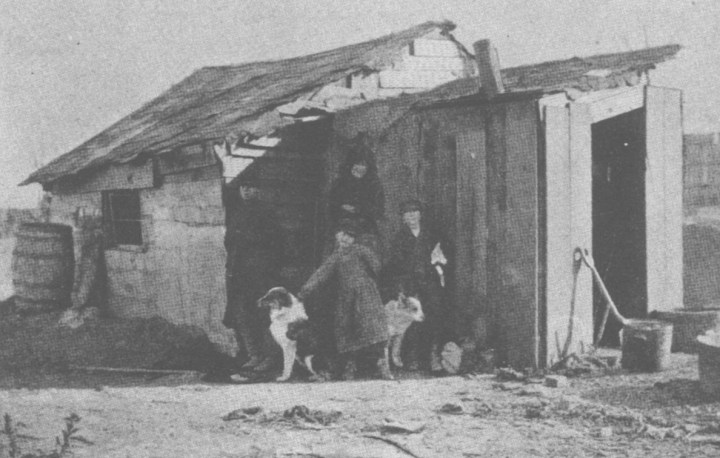
Unsettled Lawrence, through Feb. 6, 2027, Watkins Museum of History, Lawrence, www.watkinsmuseum.org
American pioneers established settlements that evolved into housed communities. Yet folks living on the fringes in unhoused or alternative camps have always been part of our towns and cities, even as they have
been marginalized by society and its legal system, or simply ignored in plain sight. But you don’t have to look away. Utilizing records, interactive maps and modern artwork, the exhibit illuminates the difficult truths, diverse experiences and de facto contributions of the “unsettled” in the anthropological tapestry of Lawrence, then and now, as diligently researched by Dr. Rachel Schwaller, a lecturer in the Departmentof History at the University of Kansas. — Brian McTavish
Homeland: The Osage in Missouri and Voices Now: Contemporary Native American Art, through Feb. 21, 2027, The Museum of Kansas City, museumofkansascity.org. See story, page 52.

Personal Best, opens late Nov., The Nelson-Atkins Museum of Art, www.nelson-atkins.org
The connection between art and sports is revealed firsthand by six local artist/athletes, whose artmaking and physical exploits share the same sincere commitment to individual excellence. The result is a debunking of assumptions about two seemingly distinct endeavors that effectively blurs the line between them. The exhibit’s lineup includes painter and football player Kwanza Humphrey, whose organic evocations of ancestors emit a fantastical yet deeply authentic vibrancy; multidisciplinary artist and mixed martial arts fighter Thea Wolfe, whose unflinching portraits of fellow fighters reflect the sport’s fury and fragility; and interdisciplinary artist and distance cyclist Tj Templeton, whose cleverly autobiographical mixed-media installation incorporates video taken by the artist while cycling the streets of Kansas City. (This exhibit is a reinstallation of an initial showing from October 2025 to March 2026, when it temporarily closed for Bloch Building renovations.) — Brian McTavish

Lights, Football, Action: Haskell Memorial Stadium Turns 100, Sept. 26, 2026–Jan. 16, 2027, Watkins Museum of History, Lawrence, www.watkinsmuseum.org
Football is known as a game of inches, but there’s a lot more ground to cover in 100 years of football games played at Haskell Memorial Stadium at Haskell Indian Nations University in Lawrence. The exhibit traces the stadium’s historical and cultural significance since its dedication in October 1926, as a World War I memorial financed entirely by Native Americans. Challenged by racial prejudice off the field and top-notch teams on the gridiron, the Haskell football team went undefeated in 1926 and has continued to be a touchstone for Native American pride and accomplishment. — Brian McTavish

Barbara Takenaga: Awestruck, Oct. 9, 2026–April 11, 2027, Kemper Museum of Contemporary Art, www.kemperart.org
“Barbara Takenaga: Awestruck” presents a comprehensive retrospective of the artist’s exuberant abstractions from the last 25 years, the first such survey in nearly a decade. Assembled from private and public collections, the 50 works attest to Takenaga’s fascinations with scale and rhythm, wave and particle, chance and choreography.
These vivid, densely detailed paintings vary widely in approach, suggesting in turn the celestial, biological, fractal, tantric and psychedelic, falling stars and surging waves. Yet they resist the referential, being transmutated by Takenaga’s poetic compression. The resulting works invite us into states of pure flow, portals to the limitless. — Grace Suh
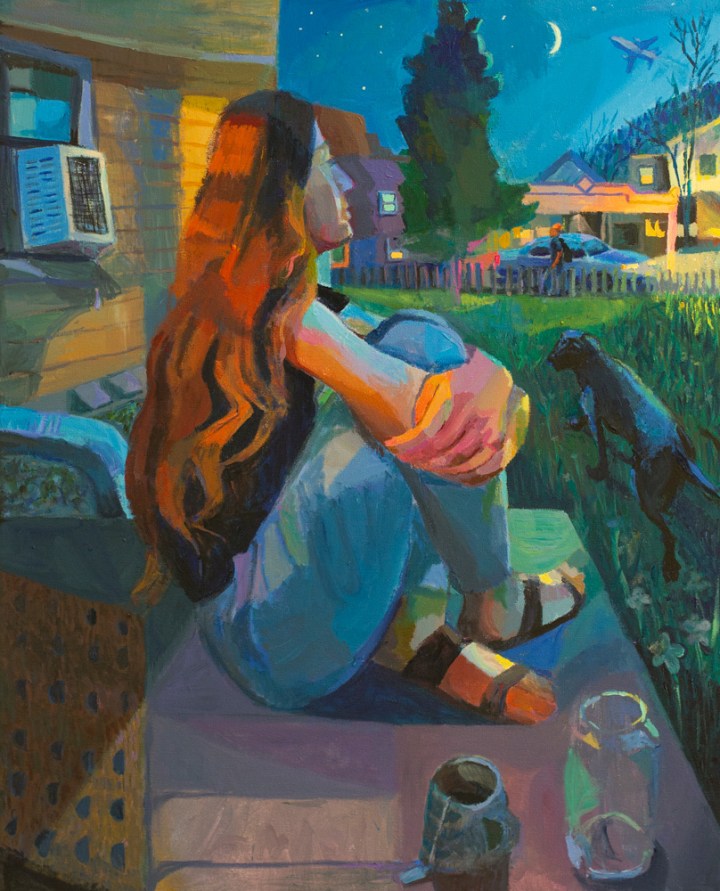
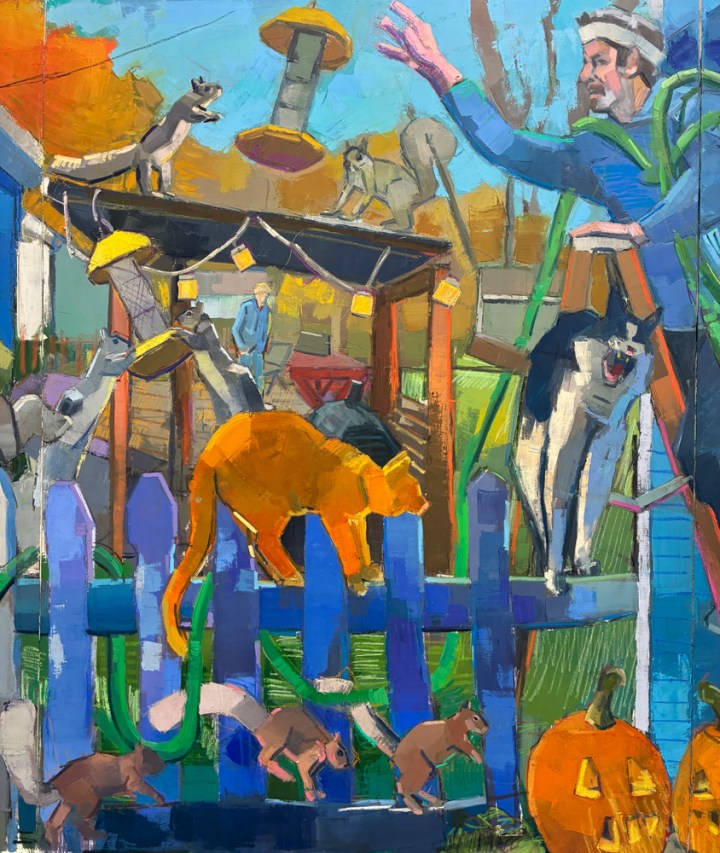
2026 Charlotte Street Visual Artist Awards Exhibition: Eric Conrad, Heehyun Choi, and Mikey Yates, Oct. 16–Dec. 18, Emily & Todd Voth Artspace at the Kansas City Art Institute, kcai.edu/artspace/
Interdisciplinary artist Eric Conrad, filmmaker Heehyun Choi and painter Mikey Yates join the ranks of the 114 Charlotte Street Visual Artist Fellows named since 1997. The prize includes an unrestricted cash award and an exhibition at an area art institution, this year at the Kansas City Art Institute’s Emily & Todd Voth Artspace. In his assemblages, sculptures and drawings, KU art faculty member Eric Conrad often turns to discarded and found clothing and other textiles. His abstract figural sculptures examine vulnerability and the emotional resonance that may be left behind in abandoned material. KCAI faculty member Heehyun Choi’s films critique and interpret the act of filmmaking and the multiple meanings of objects, using archival photography and film recontextualized with her own filmic imagery and presence. Painter Mikey Yates’ visually rich and densely packed compositions, often of friends and family in compressed interiors, sustain personal narratives touching on familiarity and togetherness. Despite the calm interiors, the paintings telegraph kinetic energy that pulsates between the color and compositional choices, and the people inside these spaces. — Dana Self
AROUND THE REGION
Michael McCaffrey: Today/Tomorrow/Yesterday, through Nov. 8, Albrecht-Kemper Museum of Art, St. Joseph, albrecht-kemper.org
The Albrecht-Kemper Museum of Art unveils “Today/Tomorrow/Yesterday,” featuring Lawrence, Kansas-based Michael McCaffrey’s recent paintings, drawings and collages showcasing narratives and relationship details that have unfolded between McCaffrey and his father over the years. Oscillating between visual accuracy and abstracted inventions, the artworks pose relatable questions and share fascinating experiences about storytelling and memory as related to fathers and sons. — Ashley Lindeman
Deanna Dikeman: A Sense of Place, through Dec. 15, Museum of Art and Archaeology, University of Missouri, Columbia, maa.missouri.edu
Deanna Dikeman is an internationally recognized photographer who lives in Kansas City. Her art has appeared in publications such as The New Yorker and Vanity Fair and is exhibited in museums and galleries around the world. (See the July/August 2026 issue of KC Studio to read about her recently installed photographs for Kansas City’s “Art in the Loop.”) One of Dikeman’s key subject matters is that of domestic life, and the Museum of Art and Archaeology at the University of Missouri – Columbia is exhibiting four of her best known series that focus on various aspects of the home. “Leaving and Waving” is a sequence of black and white photos that Dikeman made over the years of her parents in Iowa waving to her from their driveway as she drove away after visiting them. The series was made into a book that has garnered rave reviews since it first appeared several years ago. “Relative Moments” focuses on family gatherings with various family members. “Sue’s House” pictures a home that still holds the presence of the woman who once lived there, and “Donna’s House” lovingly depicts the many objects in the house of a woman who must leave her home. Dikeman’s gift to viewers is her uncanny ability to capture the grace and beauty of everyday moments that we often overlook, and she shows us that the ordinary is anything but. — Elisabeth Kirsch

Contemporary Visions of the West, through Dec. 20, Daum Museum of Contemporary Art, Sedalia, www.daummuseum.org
The nostalgic idea of the American West is rich with stories — cowboys, dusty trails, open land, migration to better opportunities. “Contemporary Visions of the West” breaks away from stereotypes and nostalgia to feature work that casts the American West as it is in the present moment. Selected artists were asked to consider themes of “place, labor, environment, power, belonging, and lived experience in the present moment,” according to Daum Museum of Contemporary Art’s website. The artists highlight Western themes through their own contemporary viewpoint as artists living and working in the United States. — Emily Spradling
Christian Thompson: Future Ancestor, through Jan. 10, 2027, Spencer Museum of Art, University of Kansas, www.spencerart.ku.edu
During the Fall 2026 semester, the Spencer Museum of Art offers an exhibition of artworks by Aboriginal Australian artist Christian Thompson. “Future Ancestor” presents a multimedia installation that interweaves conceptions of visual culture and storytelling with a focus on his Bidjara heritage. Viewers can engage with an intriguing combination of photography, video, sculpture, performance and sound as they contemplate concepts of cultural preservation, hybridity and language. — Ashley Lindeman
Wichita State University. (Courtesy of the Ulrich Museum of Art. Photo by Maddie Bowron)
Bare it All, through May 8, 2027, Ulrich Museum of Art, Wichita State University, ulrich.wichita.edu
The objects, artworks and artifacts on display at any given moment in a museum are miniscule in comparison to the multitude of items in a museum’s collection, with recent estimates stating that fewer than 5% of objects are displayed at any time. Ulrich Museum of Art seeks to “Bare It All” to viewers by displaying the majority of their collection of approximately 7,300 works. This endeavor is twofold. First, they will demonstrate the breadth and depth of the museum’s holdings, highlighting the works themselves in addition to the effort that goes into preserving such a collection. Second, they will host offsite shows and programming to engage audiences outside the gallery. — Emily Spradling
Lucy Sparrow: The Beginning of Convenience, through July 11, 2027 and Chuck Ramirez: Ordinary Wonders, through Jan. 10, 2027, The Momentary, Bentonville, Arkansas, themomentary.org
One of the strengths of The Momentary, as one of the few dedicated contemporary art venues in the region, has simply been curating engaging, accessible work. Two recently opened exhibitions accomplish this. After all, who doesn’t love felt?! British artist Lucy Sparrow sure does. So much so that for her first U.S. museum exhibition she has recreated a painstakingly researched immersive felt replica installation of a Wal-Mart circa 1984. We’re talking about more than 20,000 individually felted supermarket objects from produce to peanut butter to breakfast cereal. If it’s just too fuzzy for you, the slick and sly color photographs of San Antonio artist Chuck Ramirez can seduce you with a bushel of peas and break your heart over a plate of BBQ. Both shows have fun making art out of our shipping container civilization. — Brian Hearn
Home/Land: Wahzhazhe Artists Speak, through July 24, 2027, Marianna Kistler Beach Museum of Art, Kansas State University, Manhattan, Kan., beach.k-state.edu
A thousand years ago The Wahzhazhe people, or Osage Nation, occupied settlements from Illinois, across the rivers of Missouri, and down into Arkansas, having migrated out of the Ohio River Valley centuries prior. Two hundred years ago, the Wahzhazhe were forced onto smaller and smaller reservations in the “Indian Territory” of Kansas and Oklahoma. Today, the Osage are a thriving diaspora of more than 25,000 tribal members based in Pawhuska, Oklahoma. The Beach Museum of Art brings together three distinctive contemporary Wahzhazhe artists, Norman Akers, Anita Fields and Ryan RedCorn, to explore concepts of land, “home” and homeland through painting, textiles, ceramics and photography. The exhibition is part of a larger initiative of eight Kansas cultural organizations foregrounding Indigenous perspectives called “Home Is Where We Are: Art of First Americans.” — Brian Hearn
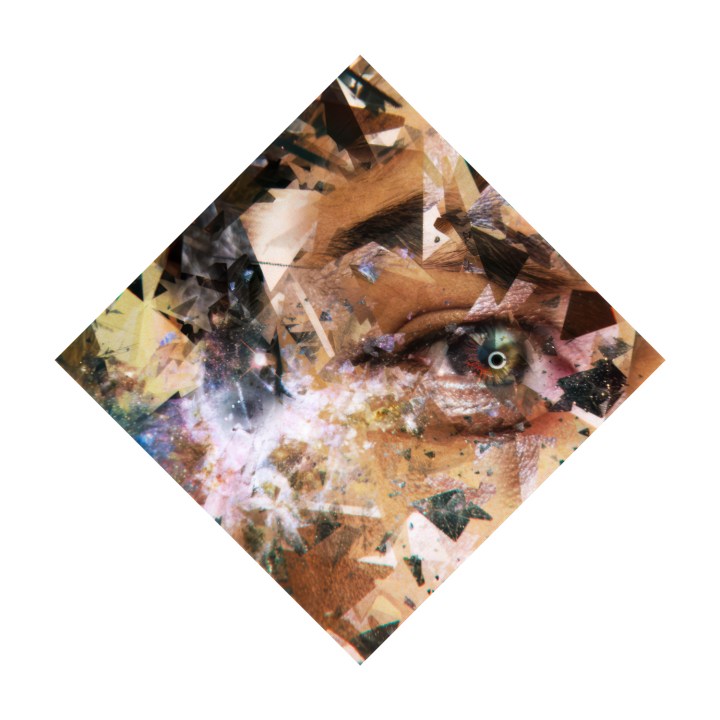
The Janus Restraint: Polychrome Ritual, Sept. 4, 2026–Feb. 14, 2027, Museum of Art + Light, Manhattan, Kan., www.artlightmuseum.org
Barry Anderson is the rare moving-image artist who has moved far beyond the screen into expanded media combining video, photography, sound and installation. His work is formally experimental while retaining enough narrative framework for you to stay enthralled. In many ways, Anderson’s practice anticipated the audiovisual possibilities afforded by the digital immersive medium. In this new solo exhibition Anderson picks up the thread of his earlier series “The Janus Restraint,” which explored human and geological life cycles, starring his own son, no less. One imagines this new iteration in the series will level up this Kansas City artist’s toolkit, adding new dimensions to his already sophisticated multimedia aesthetic. — Brian Hearn

Generation to Generation: Conversing with Kindred Technologies, Sept. 4, 2026–Feb. 14, 2027, Museum of Art + Light, Manhattan, Kan., www.artlightmuseum.org
The ongoing saga of humans and their tools has led to the implementation of artificial intelligence and its attendant controversies. Whether you think AI is a boon or a boondoggle, it appears here to stay and bound to only grow in influence. What might that lead to in art? Get an entertainingly mind-bending clue in this exhibit by Nathaniel Stern and Sasha Stiles that doesn’t suggest an artistic handoff from humans to AI, but rather a creative convergence. Six large installations in the exhibit combine diverse art forms with AI content, including a real-time motion-tracking iPad that renders hand movements into AI poetry. Discuss. — Brian McTavish
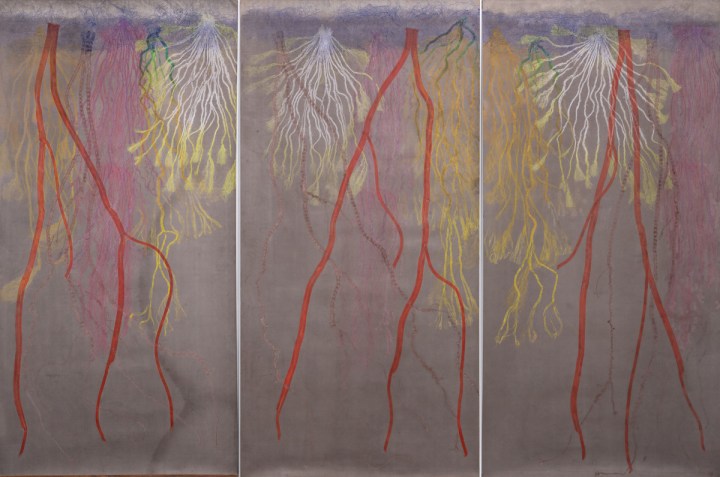
Carolina Caycedo: Growing Deep Roots, Sept. 9, 2026–Jan. 4, 2027, Mildred Lane Kemper Art Museum, St. Louis, www.kemperartmuseum.wustl.edu
Los Angeles-based Colombian artist Carolina Caycedo presents an extensive exhibition that re-envisions our fraught relationship with nature. Grounded in ecofeminism, traditional knowledge systems and environmental justice, Caycedo brings together multiple bodies of work from her practice: sculpture, drawings, prints and videos, that elevate the lives of plants, soil and rivers. Her ongoing series “Plant Portraits” and “Root Portraits,” carry the status and personality of human portraits, but instead of people, the artist visualizes the interdependent lives, shapes and colors of prairie grasslands below our feet. Another series, “Mineral Drawings,” comprises dense colored pencil and collage images of rare earth extraction mining, reminding us of the human and environmental cost of seemingly endless technological progress. Caycedo’s work offers a compelling alternative of interspecies connectivity to our otherwise Anthropocene moment. — Brian Hearn

Buenos Aires Modern, 1935–1950, Sept. 9, 2026–Jan. 4, 2027, Mildred Lane Kemper Art Museum, St. Louis,
www.kemperartmuseum.wustl.edu
Buenos Aires was already a cosmopolitan culture capital during the 1930s when modern-curious local artists embraced a steady stream of transatlantic artists fleeing European conflicts. Together in this period, European exiles, refugees and locals innovated Argentine modernism through photography, graphic design, publishing, architecture and visual art. The exhibition centers on the Buenos Aires arts power couple, Grete Stern, a Bauhaus trained German-Jewish photographer and graphic designer, and her husband, the Argentine photographer Horacio Coppola, who collaborated with the likes of poet Jorge Luis Borges among a broad social circle of creatives. Stern and Coppola would host a radical new generation of Argentine and Uruguayan visual artists forging a new modernist art movement that rejected figurative art and even the frame itself. An illustrated, scholarly catalogue is planned for the exhibition. — Brian Hearn

Coyote Time, Sept. 10–Dec. 12, 2026, Counterpublic, St. Louis, counterpublic.org
The large-scale triennial public art exhibit, Counterpublic, returns to St. Louis this year, bringing together 50 new artist commissions at five anchor sites throughout the city. Its name comes from the artist Alice Bucknell’s commissioned work for the exhibition and the video game concept coyote time, which is the moment just after jumping off a cliff in which the player has a split second to choose whether to leap or fall. “Coyote Time” explores what this in-between space means for a city, reckoning with past narratives and exploring new possibilities, with a particular focus on climate, education and immigration. Commissioned artists were asked, “How do we imagine our shared near future with boldness and hope?” The sprawling exhibition will spark conversations around this question over three months with artist projects, events and civic initiatives. — Emily Spradling
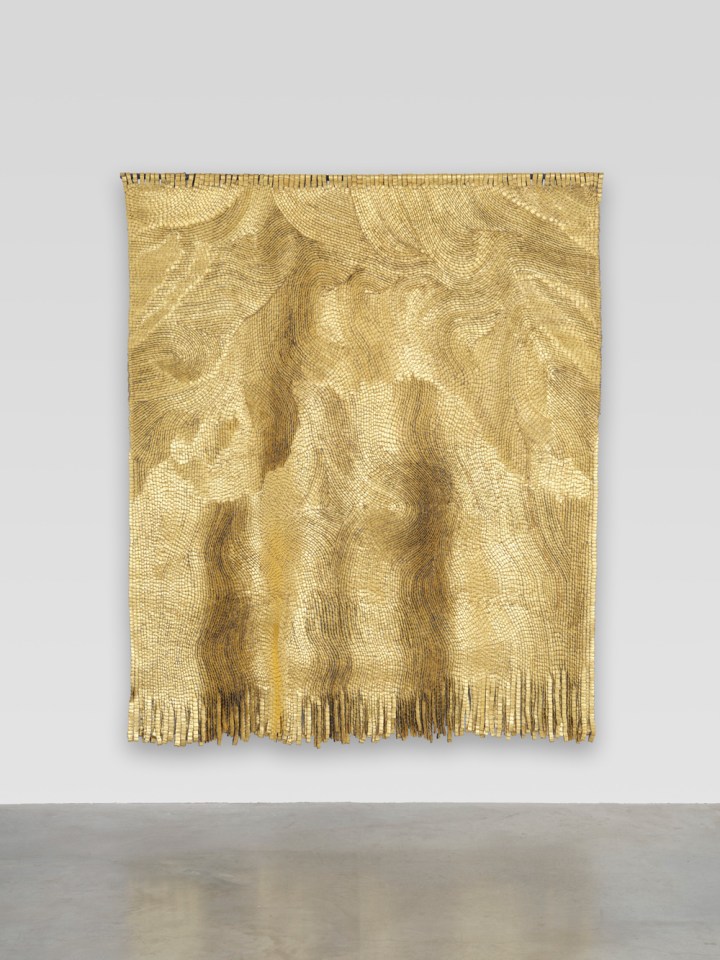
Olga de Amaral: Weaving the Infinite, Sept. 10 2026–Jan. 31, 2027, The Pulitzer Arts Foundation, pulitzerarts.org
Colombian artist Olga De Amaral’s 1992 exhibition at Johnson County Community College’s Gallery of Art introduced us to the idea that textile art and the definition of weaving can be an expansive visual and dimensional practice. De Amaral, also trained as an architectural draftsperson, deconstructed fiber art’s boundaries, creating works that morphed between weaving, painting and sculpture. This retrospective, co-organized by the Pulitzer Arts Foundation and the Smithsonian Design Museum’s Cooper Hewitt, spans 65 years, multiple media, and includes 130 works of art. With influences as diverse as Japanese kintsugi, medieval icons’ vigorous deployment of gold, and contemporary sculpture, De Amaral uses multiple materials and colors, including gold, to create three-dimensional work that amplifies weaving and its iconography, and enlivens each work with a mystical emotionalism that vibrates across 65 years. — Dana Self

Grandma Moses: A Good Day’s Work, opening Sept. 12 at Crystal Bridges Museum of American Art, crystalbridges.org
Before Hallmark bought the rights to reproduce her work for greeting cards in the late 1940s, Grandma Moses’ rural scene paintings had already been exhibited at New York’s Museum of Modern Art and in the city’s Galerie St. Etienne. “Grandma Moses: A Good Day’s Work,” comprising approximately 80 paintings, embroidery and other ephemera, may encourage a renewed appreciation for folk art in general and self-taught artist Grandma Moses, in particular. Born Anna Mary Robertson, Grandma Moses spent a lifetime as a “housekeeper, farmer and mother” who didn’t begin to create art until her late 70s. She began to receive public recognition and celebrity at age 80, and her paintings of everyday life and work on the farm — the countryside cloaked in winter snow, festive summer weddings and other homey outdoor scenes — emerge out of a centuries-long history
of genre painting. — Dana Self
Land in Alliance, Sept. 16, 2026–Jan. 10, 2027, Salina Art Center, www.salinaartcenter.org
The Salina Art Center’s “Land in Alliance” exhibition focuses on human connection and responsibility to the land. Curated by Wichita-based Taioma Rutledge (Ojibwe/Meskwaki/Dakota), the exhibition cultivates an essential conversation among Native and non-Native artists as well as ecologists and community voices.
The exhibition features expansive public programming, offering a
variety of occasions for deeper discussion and analysis of the artworks as well as conceptions of alliances, species and how we process time. — Ashley Lindeman
Jill Enfield, Sept. 19–Nov. 8, Albrecht-Kemper Museum of Art, St. Joseph, albrecht-kemper.org
A new photograph series by internationally acclaimed photographer Jill Enfield, funded by a grant from
Arts Mid-Hudson, offers compelling images of landscapes along the Hudson River, combining digital photography methods with alternative processes. Enfield is best known for her work with cyanotype and collodion processes as well as her best-selling book Jill Enfield’s Guide to Photographic Alternative Processes. The opportunity to see her works in the Kansas City metro is unprecedented. — Ashley Lindeman

courtesy the artist and Hauser & Wirth. photo by Stephanie Powell)
Past & Present: Celebrating New Acquisitions and Collection Highlights at the Wichita Art Museum, Oct. 10, 2026–Jan. 3, 2027, Wichita Art Museum, wichitaartmuseum.org
“Past & Present” displays paintings, sculptures and textiles from the collection of the Wichita Art Museum, including a first look at 20 new and exciting acquisitions expanding a collection that has evolved over the past 90 years. The exhibit includes works by Tanya Aguiñiga, Norman Akers, Milton Avery, Nick Cave, Elizabeth Catlett, Robert Henri, Edward Hopper, Mary Ethel Young Hunter, Rashid Johnson, Beth Lipman, Aliza Nisenbaum, Robert Peterson, Winfred Rembert, Fritz Scholder, April Surgent, Stephen Towns, Uman, Kehinde Wiley, Purvis Young and others. It was curated by Dr. Tera Lee Hedrick and supported by the Downing Foundation, Friends of the WAM and the City of Wichita. — Ashley Lindeman

Women Impressionists and the Land, Oct. 17, 2026–Jan. 10, 2027, Saint Louis Art Museum, www.slam.org
Moving from the cozy domesticity of 19th-century interior spaces to the out-of-doors, this exhibition focuses on the women Impressionists’ facility in painting contemporary Parisian outdoor life, nature and landscape. Berthe Morisot, Mary Cassatt, Marie Bracquemond and Blanche Hoschedé-Monet are heavily featured, showing a broader perspective than we have traditionally seen for these artists. Organized by the Saint Louis Art Museum, the exhibition gives particular focus to Berthe Morisot, who trained with landscape painter Camille Corot and who concentrated much of her painting on nature imagery. By shifting focus from inside the home to the out-of-doors — Paris’ familiar parks, gardens and other outdoor spaces — the artists’ dexterity for landscape painting emphasizes their equality with their male peers and their status as major artists of Impressionism. — Dana Self


