


Ron Hinshaw, Pueblo of Laguna, Eagle Katsina Carving (1980s)
More than 200 remarkable objects in the National Museum of Toys and Miniature’s “Native Arts in Miniature” exhibit highlight the expertise of more than 100 Native American artists from over 30 tribes. Through artist videos and detailed signage, the show also highlights the history, personal stories and tribal traditions of artists born into the oldest cultures in the country.
“Native Arts” was more than two years in the making, involving curators Madeline Rislow and Amy McKune. Some of the miniatures in the show were already in T/m’s permanent collection, purchased early on by the museum’s founder Barbara Marshall at the annual Santa Fe Indian Market, the world’s largest Native American art market, held every August. There are plans to continue collecting in this field and adding to T/m’s stellar holdings.

The exhibit is dazzling, each artwork a masterpiece of craftsmanship. Basketry, pottery, katsina figures, clothing and a diverse number of contemporary items such as skateboards are skillfully placed on pedestals throughout the gallery, offering one the chance to see a spectrum of Native arts in one take. The opportunity to see the amazing walrus-stomach parka by Glenda McKay of the Athabascan-Inupiaq tribe in the same space as Bess Yanez’s Hopi katsina clown carvings should not be missed!
Carving, painting, pottery, silversmithing and weaving are just some of the focal art-making techniques used by the artists in this show.
Native artists have been making miniatures for decades and do not necessarily adhere to a strict size code. In the 19th century in what is now California, basket making was such an advanced art form that women from different tribes held contests to determine who could create the tiniest and most beautiful basket the fastest. In this show, Sarah Sockbeson’s ash and sweetgrass double curl weave lidded basket is perfection, as is Lyda Thomas of the Tohono O’odham tribe’s Man in the Maze Basket. There are several wonderful works identified as “artist once known,” a reference to works collected early on by artists whose names have not yet been found.
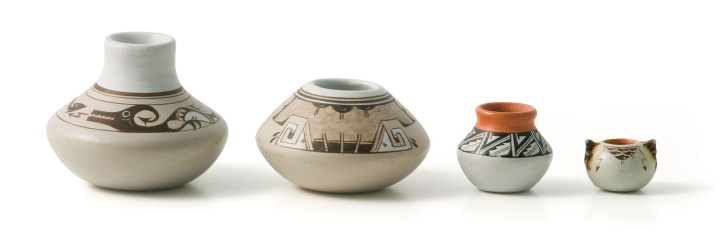
While great miniatures are typically objects of fascination, there is an element of specialness to this show. The artworks here include centuries of tribal tradition expressed in contemporary and personal ways. Iconic motifs, such as the various nature symbols on the pottery, are resonant with meaning, as they are based on historic rituals, beliefs and practices crucial to each nation. As Alisha Sanchez of the Acoma Pueblo states in the gallery handbook: “The patterns are more than decoration; they tell stories passed down through generations.”
Katsina dances are still performed, and pottery and baskets continue to be major expressions of tribal and personal identity as well as sources of income for cultures that have often been ignored.
There are a number of artists in residence planned through January, complete with artist talks and workshops. All are listed on the museum’s website.
“Native Arts in Miniature” continues at The National Museum of Toys and Miniatures, 5235 Oak St., through Jan. 25, 2027, Hours are 10 a.m. to 4 p.m. daily, except Tuesday, when the museum is closed. For more information, 816.235.8000 or toyandminiaturemuseum.org.


