
Early music practitioners tend to be very zealous when approaching their art, whether it involves the use of lower pitch, historically proven to be accurate for early music, or different bowing styles. They often use instruments from earlier times or modeled after older instruments, with gut strings that require frequent and arduous tuning. Performers consult centuries-old treatises to discern how to ornament musical lines.
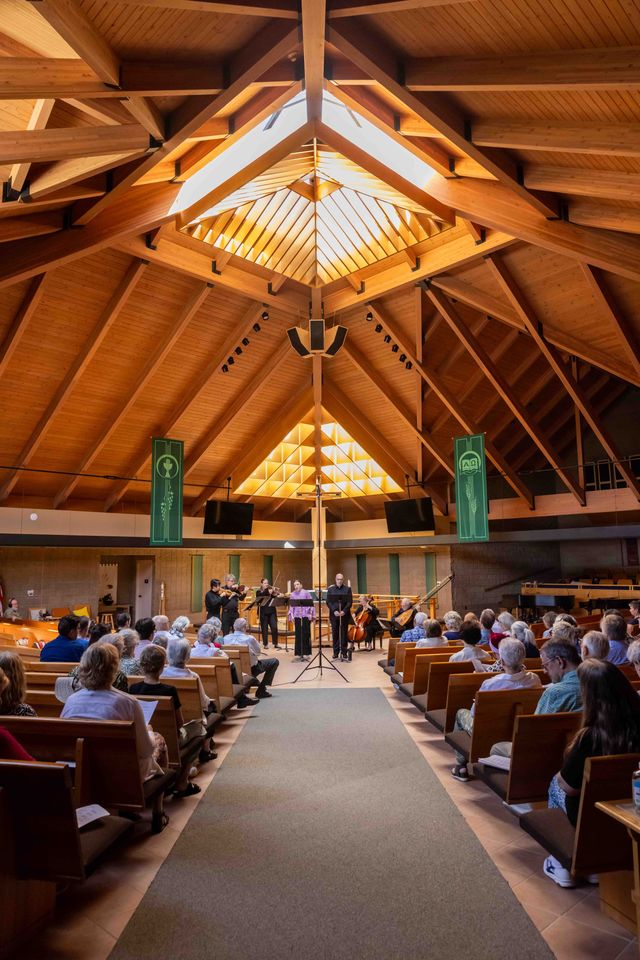
But the best ensembles perform with both elegance and passion. This is just how the Kansas City Baroque Consortium presented the concluding concert of its 10th annual summer series on Sunday afternoon at Gloria Dei Lutheran Church in Kansas City, MO.
The concert featured an ensemble of 15 string players, including a theorbo (a lute with an extended neck) and harpsichord. The presentation was well planned with the full ensemble playing in the beginning, middle and end, and works featuring smaller numbers of performers in between.
The program opened with Francesco Geminiani’s Concerto Grosso in D Minor, “La follia” (after Corelli, Op. 5, No. 12). Based on a well-known solo sonata by Arcangelo Corelli published in 1700, Geminiani’s work expands the work for orchestra. The performers opened the work with a sure sense of ensemble blend and balance, crisp rhythms and assured musicality, with repeats played softly but with no less intensity.
After the attractive opening theme, 23 variations follow. Violinists Daniel S. Lee and Zsolt Eder and cellist Sara Edgerton were featured soloists, deftly managing the technically demanding solo string parts in expert fashion. The composer regularly altered the nature of the variations (fast/slow; solo group/full ensemble; dancelike/meditative), and the performers responded adeptly. This was one of the best works on the program.
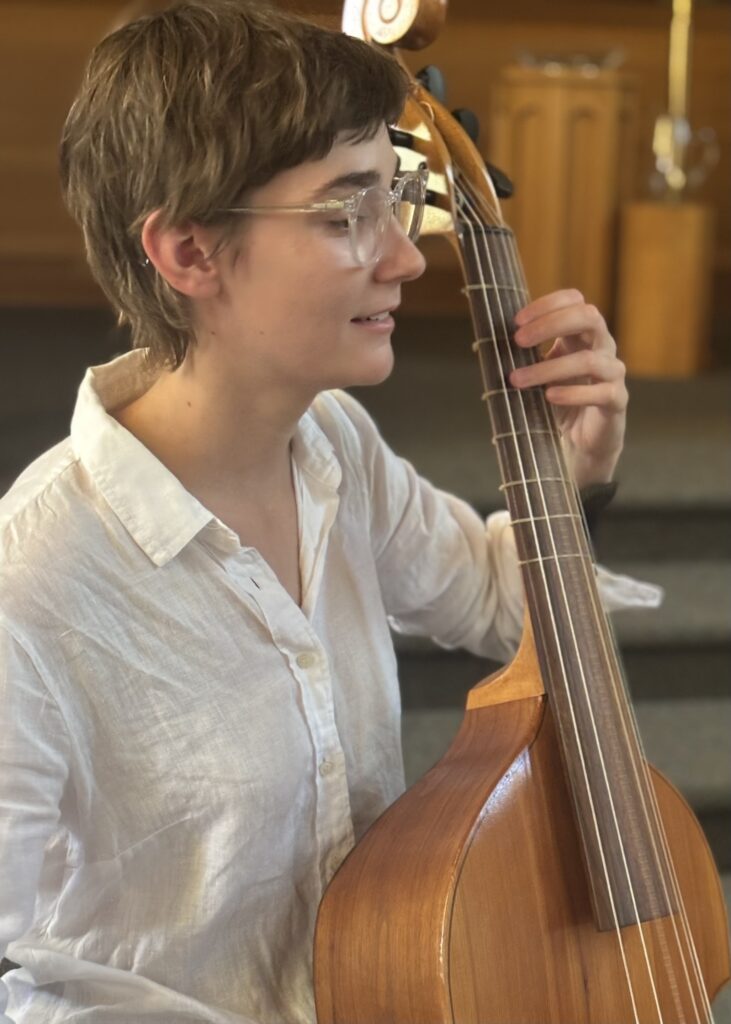
Tess Roberts was the featured soloist in the next work, Georg Philipp Telemann’s Concerto for Viola da Gamba, Strings and Basso Continuo in A Major. The viola da gamba is a sort of cousin of the cello, but somewhat softer and with more strings. Roberts played with remarkable warmth and lyricism throughout the work. At the beginning of the first movement, the theorbo was not quite in sync with the rest of the 6-player ensemble, but the matter was soon resolved. Roberts was at her most expressive in the brief but dreamy third movement, when she displayed rich tone and tastefully ornamented lines. The delightful dancelike finale opened with imitative violin lines. The group responded with impressive and lilting phrases.
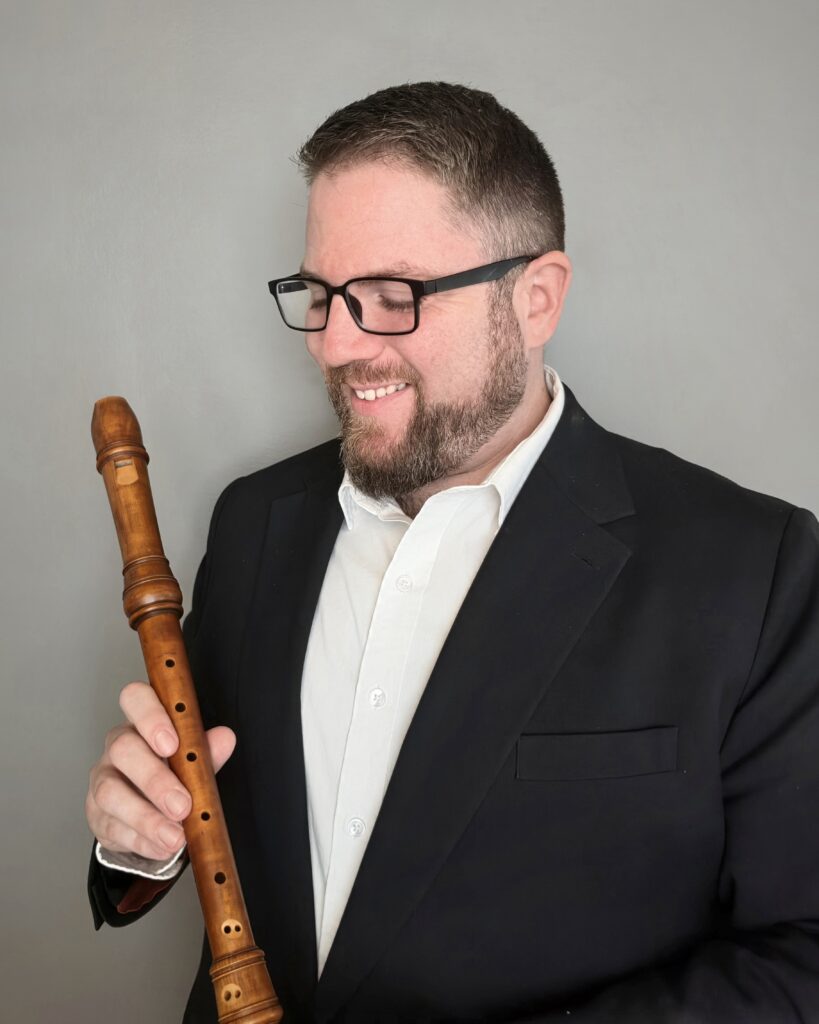
The full ensemble returned, joined by Trevor Stewart playing the soprano recorder for Antonio Vivaldi’s Concerto in G Major for Soprano Recorder, Strings and Basso Continuo. The work is nicknamed “La tempesta di mare” (“The Storm at Sea”) due to its turbulent opening. Stewart was nothing short of brilliant on the recorder, launching a virtuosic display of rapid notes that sounded at times like a perpetual motion movement. Not only were Stewart’s rhythms accurate, but his tone was bright and attractive.
The rest of the performers were also impressive throughout the piece, from the crisp, well-defined entrances of the full ensemble in the first movement to the energy they displayed throughout the slower, harmonically more stagnant second movement. The finale was again a dazzling display of recorder virtuosity.
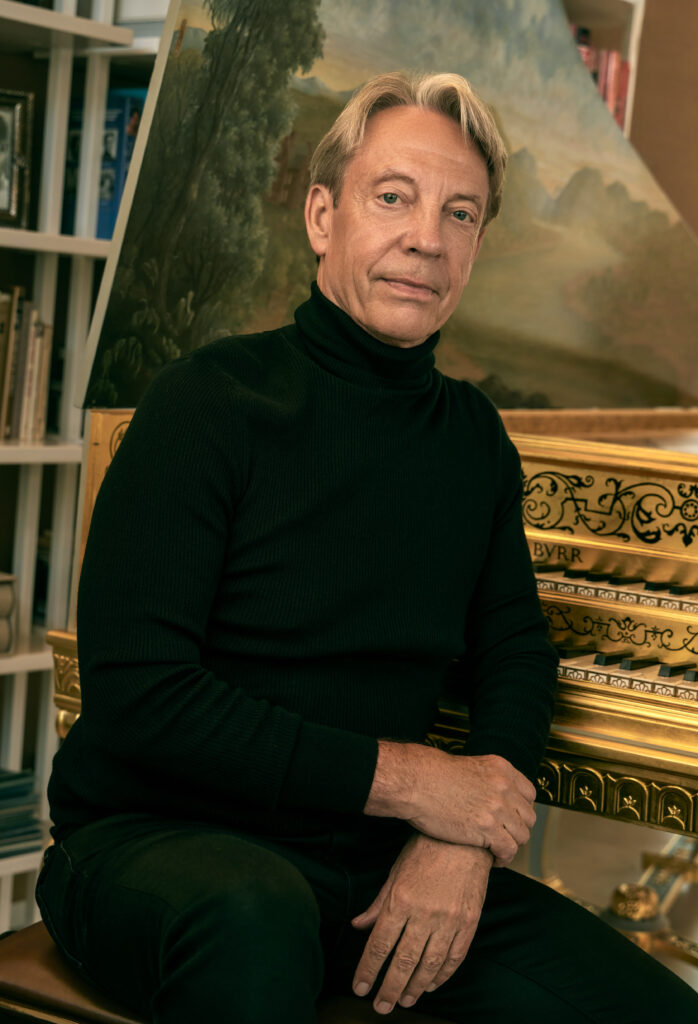
Harpsichordist Charles Metz stepped out of his supporting role with the ensemble to take the reins as soloist for Three Sonatas for Harpsichord by Domenico Scarlatti. The three works served as a fine set, and the fast-slow-fast tempos were reminiscent of the order of a later classical sonata. The Sonata in D Minor, K. 1 was melodious and full, played with an attractive tone and decisive articulations. Sonata in B Minor, K. 87 was slower and more pensive, and Metz responded with great musicality. Occasionally he would briefly pause before a note, making the listener anticipate what followed. The rapid Sonata in D Major, K. 492 was played with expertise and panache, and the trio of works was warmly received by the audience.
The concert concluded with the full ensemble performing Vivaldi’s Concerto in B Minor for 4 violins, Cello, Strings and Continuo, Op. 3, No. 10. Featured soloists were violinists Daniel S. Lee, Zsolt Eder, Can Balcik-Moretti and Rob Patterson alongside cellist Trilla Ray-Carter. As always, the solo parts, interspersed among the performers, were technically challenging, but in the opening movement the violins suffered from occasional slips in intonation. The dancelike finale was crisp, accurate and exciting, a fine ending to a rewarding afternoon.
While the Kansas City Baroque Consortium has concluded its annual summer series, look for more information about the ensemble and upcoming performances and activities at www.kcbaroque.org.
This concert was reviewed on Sunday, August 23, 2026.