
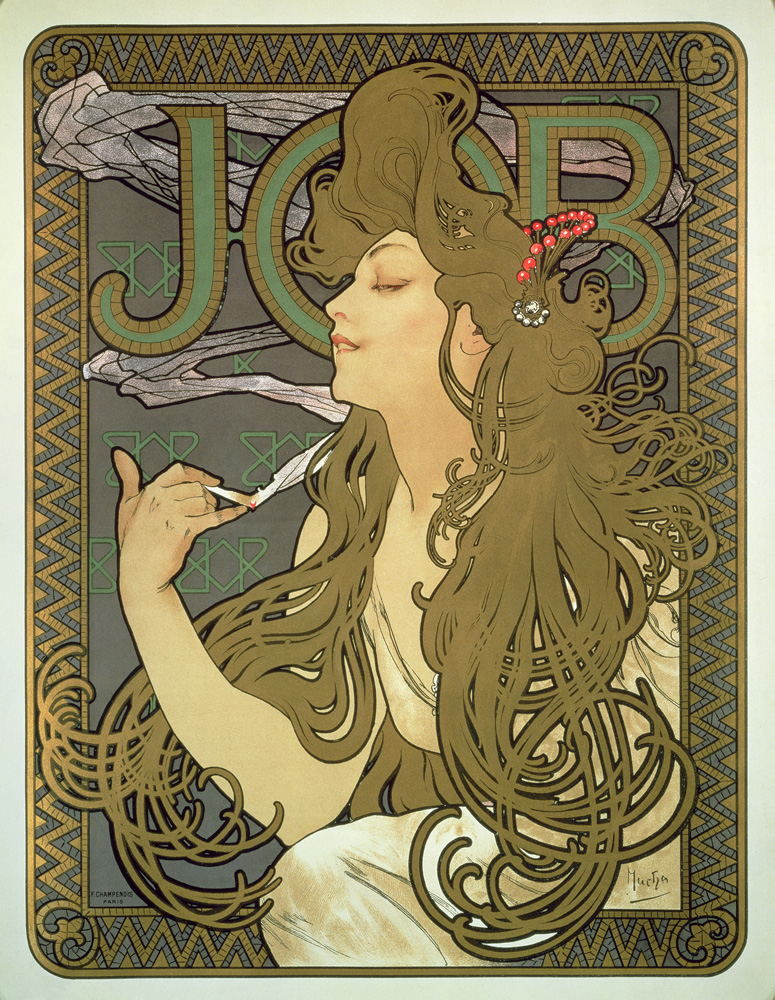
Alphonse Mucha, Job, 1896. Color lithograph 26 1/4 x 18 1/4 inches. Collection of the Mucha Trust. (© 2025 Mucha Trust.)
A Czech artist from Bohemia who became a defining visual voice of Paris’s Belle Époque, Alphonse Mucha (1860–1939) created images so distinctive that they helped shape modern design. With cascading hair, haloed heads, and sinuous, rhythmic contours, his posters transformed the streets of fin-de-siècle Paris into open-air galleries—and elevated advertising to art.
Timeless Mucha: The Magic of Line, organized by the Mucha Foundation, brings more than 100 works to Kansas City, tracing the evolution of “le Style Mucha” from its explosive debut in the 1890s to its remarkable afterlives in psychedelic rock, American comics, and Japanese manga. The exhibition reveals how Mucha’s signature line—organic, curving, and alive—became one of the most enduring visual languages of the modern era.
Mucha first electrified Paris with his posters for legendary actress Sarah Bernhardt. His elongated formats, floral halos, soft pastels, and stylized geometry created a new aesthetic that blended spirituality, sensuality, and modern marketing. Through advances in color lithography, his images circulated widely—on posters, postcards, calendars, and magazines—making beauty accessible to everyday life. For Mucha, ornament was not excess but essence: a universal language rooted in nature and harmony.
Yet Mucha’s story does not end in the 1900s.
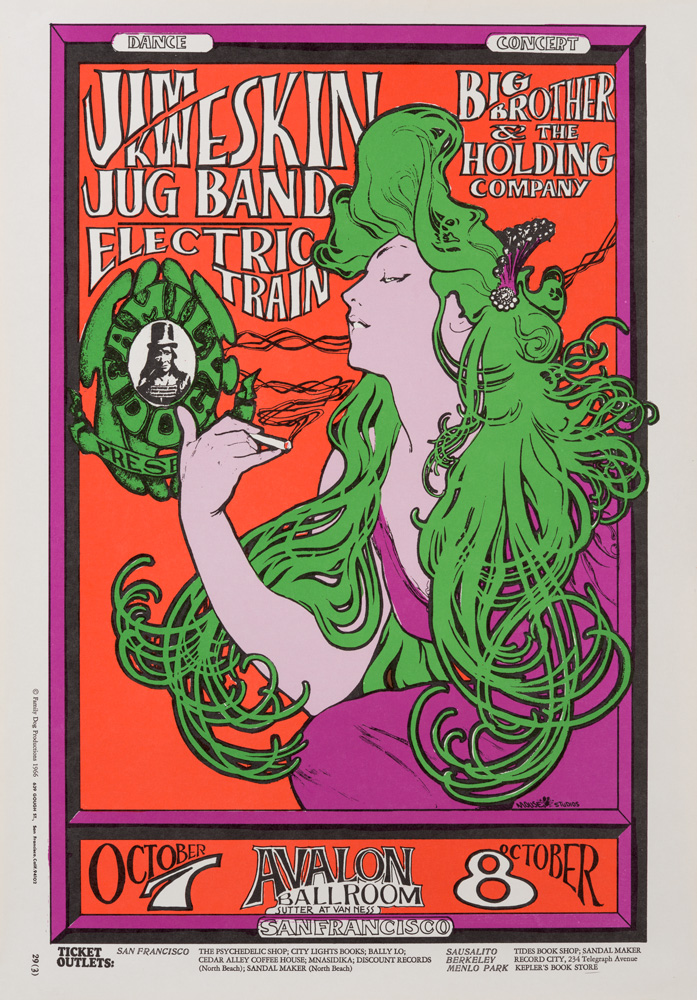
In the 1960s, amid youth protest and the rise of “Flower Power,” his long-haired muses returned as icons of counterculture. Psychedelic rock posters and album covers reimagined his flowing forms in Day-Glo color, transforming Art Nouveau into the visual soundtrack of a second bohemian revolution. An immersive “psychedelic room” in the exhibition pairs Mucha-inspired rock album covers with music and graphics from that era—an electric reminder that his line never lost its edge.
Mucha’s influence extended into graphic storytelling as well. His ornamental framing devices, idealized heroines, and mythic sensibility shaped the look of American comics—including publishers such as Marvel Comics—and inspired generations of Japanese manga artists. Flowing hair, decorative borders, celestial halos, and heightened fantasy worlds continue to echo his designs, demonstrating how a style born in fin-de-siècle Paris found new life across continents and media.
From Bohemia to bohemians, from Paris posters to graphic novels and manga, Mucha’s line has never stopped moving. Timeless Mucha invites you to follow its path across more than a century of art, music, and storytelling—and to experience firsthand the magic of a line that continues to shape how we see.
–Aimee Marcereau DeGalan, Ph.D., Louis L. and Adelaide C. Ward Senior Curator of European Arts